

Grammostola
Grammostola Simon, 1892 is a genus of New World tarantulas in the family Theraphosidae, subfamily Theraphosinae. Its members are large, terrestrial, burrow-dwelling spiders distributed across the temperate and subtropical zones of southern South America — Argentina, Bolivia, Brazil, Chile, Paraguay, and Uruguay. The type species is Grammostola pulchripes (Simon, 1891), and the genus contains several of the most familiar animals in the pet hobby, including G. rosea (Chilean rose), G. pulchripes (Chaco golden knee), and the black-bodied taxa marketed under the "G. pulchra" label. As of the World Spider Catalog (2026), 21 species are recognized as valid — a figure that has shifted repeatedly over the years as names are described, synonymized, and revised.
A genus assembled from fragile foundations
The taxonomic instability that hobbyists encounter is largely a legacy of how the genus was built. Many Grammostola species were erected in the 19th and early 20th centuries from single specimens — often a lone juvenile or a single sex — accompanied by brief diagnoses that relied heavily on body coloration. Color is an unreliable diagnostic character in theraphosids: it varies with age, molt cycle, sex, and individual variation. The older literature, therefore, produced numerous poorly circumscribed names, overlapping descriptions, and a long trail of subsequent synonymies. Ferretti, Pompozzi, González & Pérez-Miles (2013) offer a concise illustration of this churn, describing a new species (G. diminuta) in the same paper in which they sank the older name G. fossor as a junior synonym of G. vachoni — names being added and removed in a single revision.
Only in recent decades has integrative taxonomy — combining genital and somatic morphology, molecular (mitochondrial and nuclear) data, and geographic distribution — begun to stabilize species limits through the work of Ferretti, Montes de Oca, Pérez-Miles, D'Elía, and collaborators.
The anthracina problem
Grammostola anthracina (C. L. Koch, 1842) illustrates the issue directly. For most of its history, it was treated as a single variable species encompassing both black and reddish-brown color morphs. Integrative species-delimitation analyses by Montes de Oca, D'Elía & Pérez-Miles (2016) demonstrated — using COI-based phylogenetics together with morphology and biogeography — that these two morphs are not even sister lineages, meaning the traditional "anthracina" concept lumped together unrelated taxa. The black Uruguayan populations were consequently split off and described as a new species, Grammostola quirogai Montes de Oca, D'Elía & Pérez-Miles, 2016.
The pulchra / quirogai confusion and the hobby trade
The most consequential confusion for keepers surrounds Grammostola pulchra Mello-Leitão, 1921, the "Brazilian black." Its original description was vague and based on century-old material, leaving the name poorly anchored and leading to downstream errors — including mislabeled GenBank sequences and widespread misidentification. A 2023 redescription by Montes de Oca, Pérez-Miles, and colleagues used morphology, genetic distance, phylogeny, and distribution to finally clarify the species: true G. pulchra is restricted to the Pampa biome of western and southern Rio Grande do Sul, Brazil, and is diagnosed in part by a male embolus bearing a developed apical keel — a structure reported for the first time in the genus.
This matters for the trade because G. quirogai is sympatric with, and externally near-identical to, G. pulchra, yet was not formally described until decades after black "pulchra" had already entered the hobby. As a result, it is now considered likely that most — possibly all — animals sold as Grammostola pulchra are in fact Grammostola quirogai. Keepers should treat the "pulchra" label on hobby stock with caution: the two cannot be reliably separated by color alone, and confident identification depends on locality data and, ultimately, examination of mature male genitalia.
Sources
World Spider Catalog (2026). Grammostola Simon, 1892 — species list (21 valid species), version 27. Natural History Museum Bern. https://wsc.nmbe.ch/species-list/3536/Grammostola
Ferretti, N., Pompozzi, G., González, A. & Pérez-Miles, F. (2013). The genus Grammostola Simon 1892 (Araneae: Theraphosidae): a new species from western Argentina, new synonymy and distributional data. Journal of Natural History 47(47–48): 2961–2977.
Montes de Oca, L., D'Elía, G. & Pérez-Miles, F. (2016). An integrative approach for species delimitation in the spider genus Grammostola (Theraphosidae, Mygalomorphae). Zoologica Scripta 45(3): 322–333.
Montes de Oca, L., Pérez-Miles, F. et al. (2023). Using the Integrative Approach to Update a Gap of One Century: Redescription and New Distribution Records of the South American Tarantula Grammostola pulchra (Araneae: Mygalomorphae: Theraphosidae). Zoological Studies 62: 05. https://pmc.ncbi.nlm.nih.gov/articles/PMC10131071/
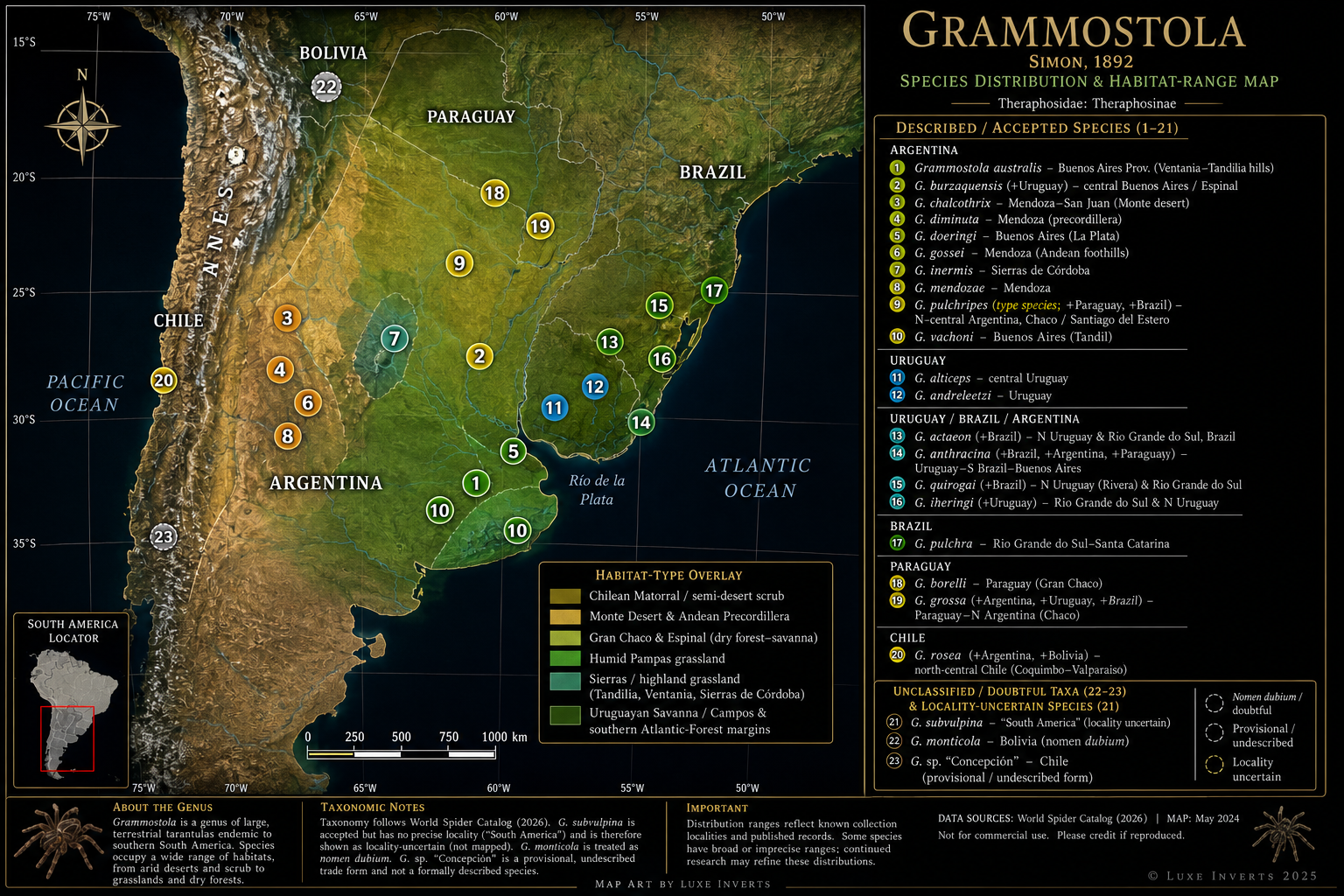
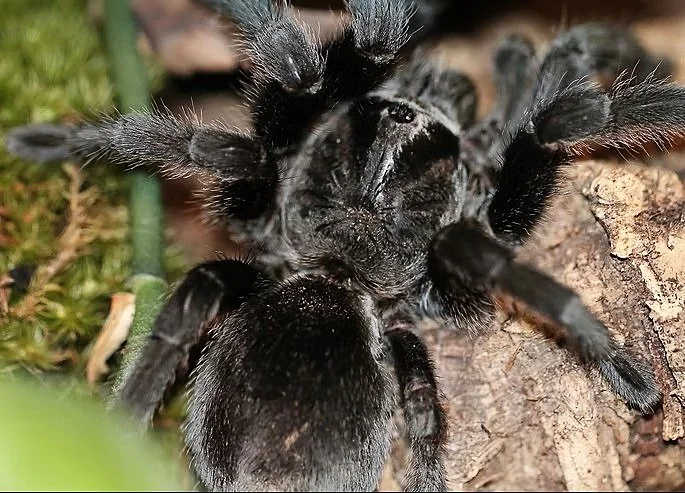
Grammostola pulchra
Brazilian Black
Grammostola pulchra Mello-Leitão, 1921 is the Brazilian Black, one of the most widely kept New World theraphosids and the archetype of a uniformly melanic tarantula. The genus Grammostola Simon, 1892 is southern-Neotropical, diagnosed in part by type III urticating setae on the opisthosoma and by mild venom profiles; at time of writing the genus holds roughly two dozen valid species distributed from southern Brazil south through Uruguay, Argentina, and Chile (World Spider Catalog, 2026). G. pulchra was described from Rio Grande do Sul, Brazil and is known from the subtropical grasslands and forest edges of the Pampas biome. It is notable among commonly-kept species for exceptional longevity — documented captive females have reached 25+ years — and for one of the most placid temperaments in the family, making it the canonical scientific-name exception to the rule that docility is a hobby marketing claim.
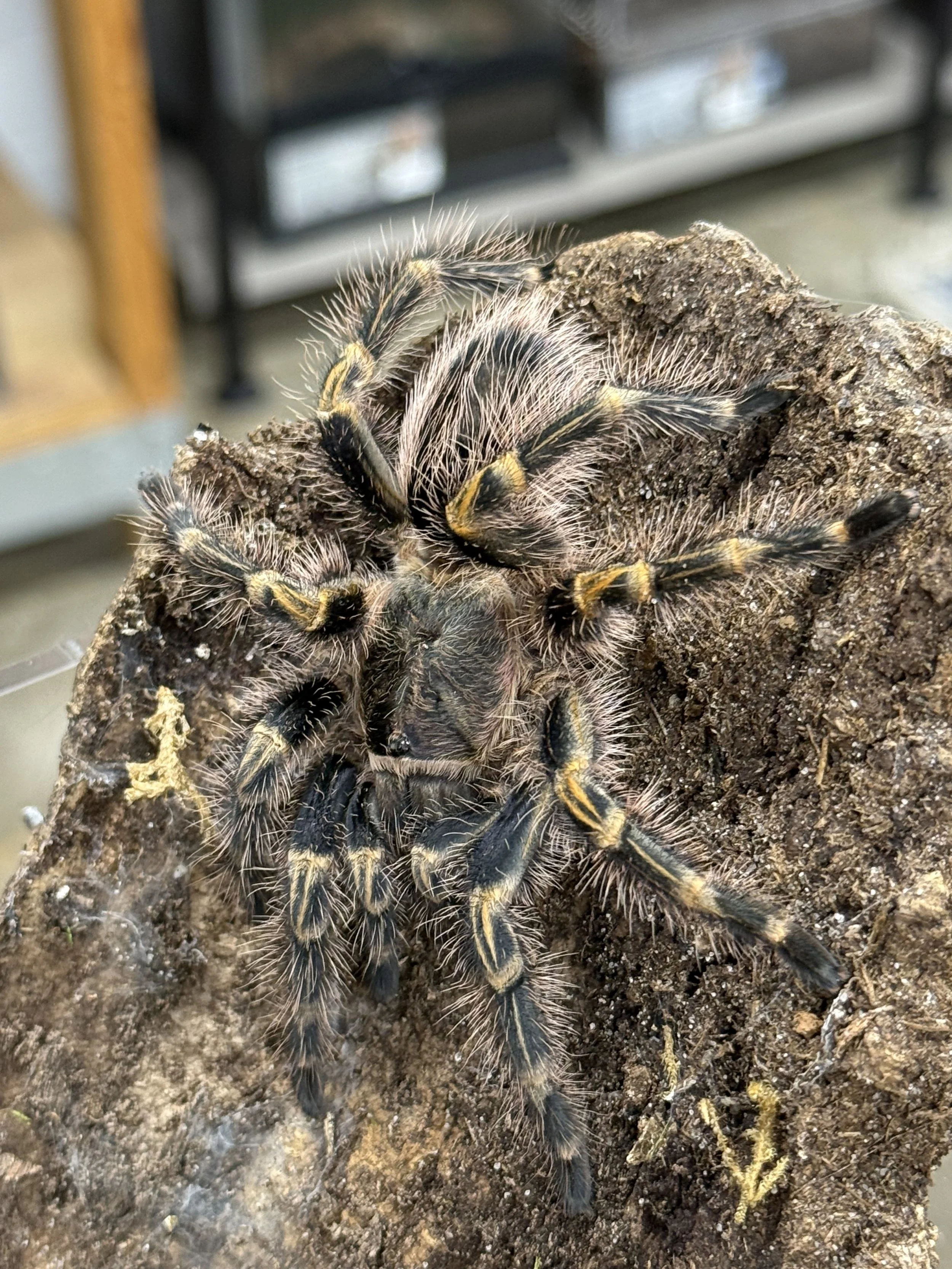
Grammostola pulchripes
Chaco Golden Knee
Grammostola pulchripes (Simon, 1891) is the Chaco Golden Knee and the type species of Grammostola Simon, 1892, originally described as Eurypelma pulchripes and transferred with the erection of the genus itself the following year. It was known for much of the hobby's history under the later synonym Grammostola aureostriata Schmidt & Bücherl, 1995, and pre-2005 hobby literature uses the two names interchangeably. The species is a Chaco dry-forest and Chaco-subtropical-transition specialist, recorded across the Gran Chaco region of Paraguay, northern Argentina, and southern Bolivia. Among the larger species in the genus, it is the most consistently cited representative of the Grammostola-typical temperament profile: placid, slow-moving, surface-active, and strikingly long-lived. The genus as a whole was treated in Ferretti et al.'s 2011 Central Argentinian revisions (Zootaxa 2828), which substantially rationalized species limits in Grammostola; G. pulchripes's status has been stable across the intervening revisions.
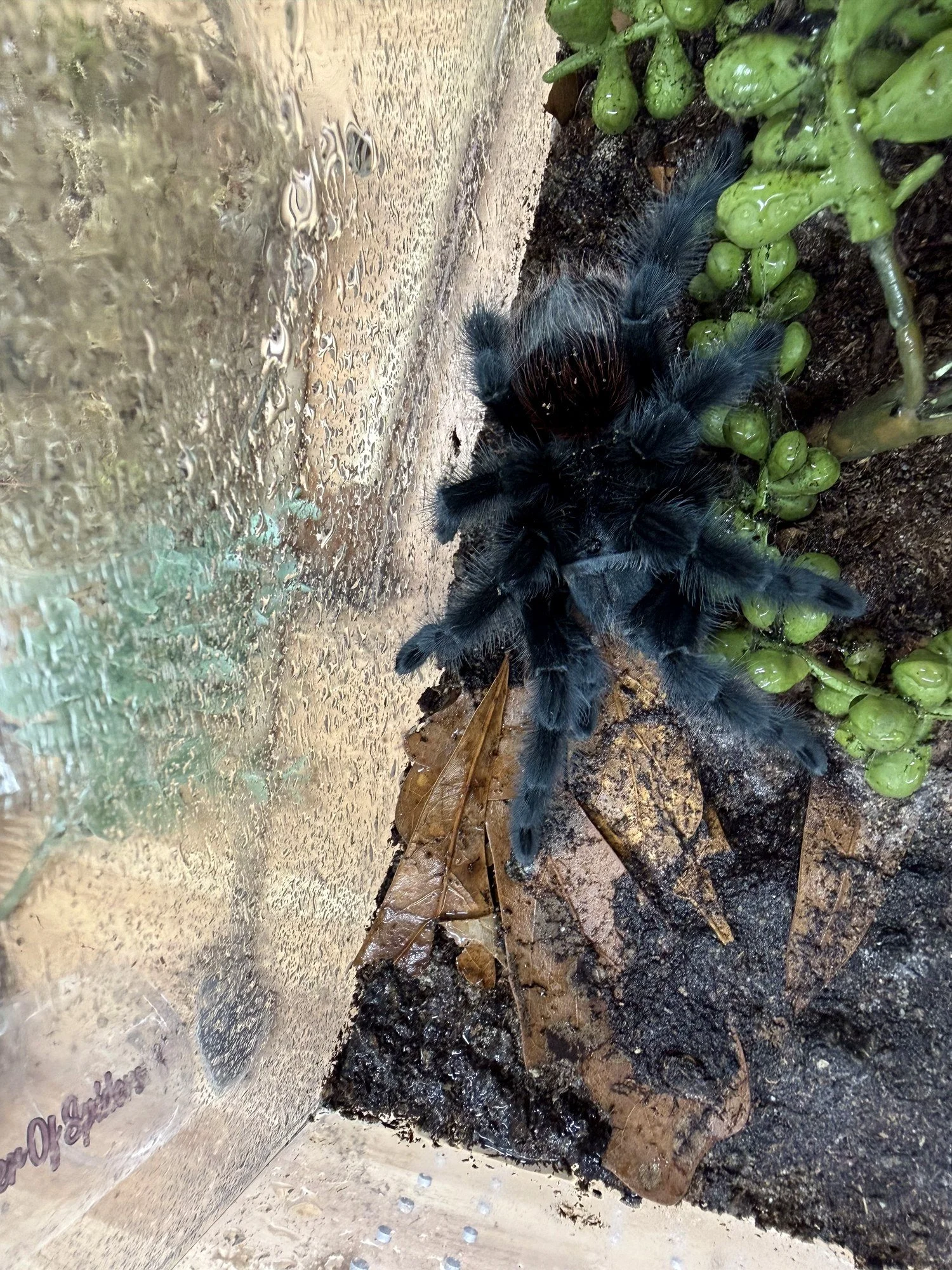
Grammostola actaeon
Brazilian Red Rump
Grammostola actaeon (Pocock, 1903) is the Brazilian Red Rump, an Atlantic-forest Grammostola distinguished from congeners by the strongly contrasting deep-red opisthosomal setae overlaid on a uniformly velvet-black body and legs — the most intense red-versus-black contrast in the genus. Originally described by Pocock from Brazilian material, the species sits within the eastern Brazilian and Paraguayan Grammostola radiation alongside G. iheringi and G. anthracina, and tolerates the warmer, more humid lowland husbandry typical of Atlantic-forest theraphosids rather than the dry-cool regimen of the Chilean and Argentine highland congeners.
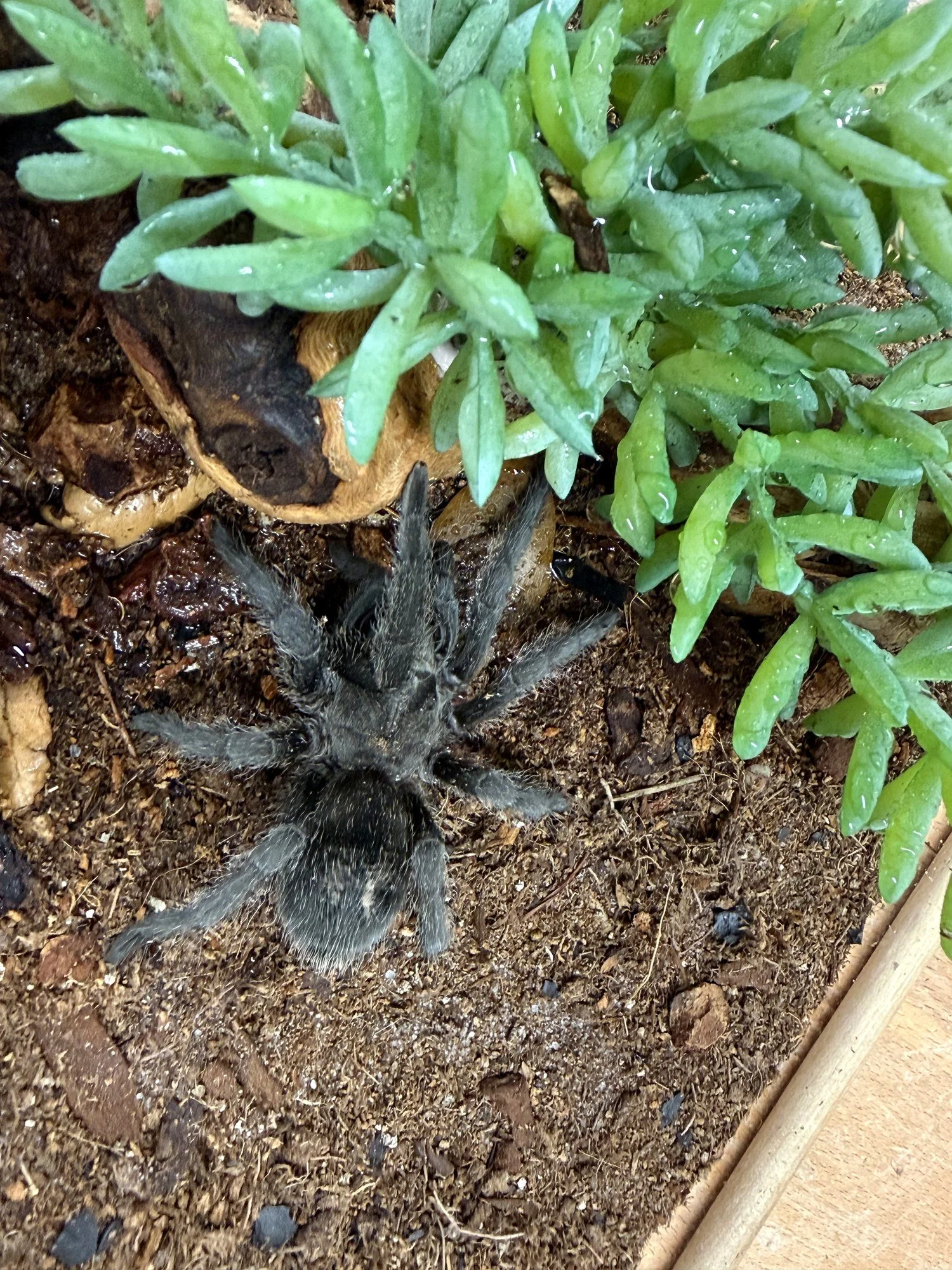
Grammostola anthracina
Brazilian Giant Tawny Red
Grammostola anthracina (C. L. Koch, 1842) is the Brazilian Giant Tawny Red, a long-recognized large-bodied Grammostola distributed across northeastern Argentina, Uruguay, and adjacent southern Brazil. Adult coloration is a deep slate-grey to charcoal base — the basis for the species epithet (anthracina, “coal-like”) — overlaid with a muted reddish-pink wash of opisthosomal setae that intensifies in fresh post-moult condition and fades between molts. The species is among the most heavily documented oothecal-setae sources in the genus (Pompozzi et al., 2023, Arachnology) and shows the type-I and type-IV setae complement that the genus is partly diagnosed by.
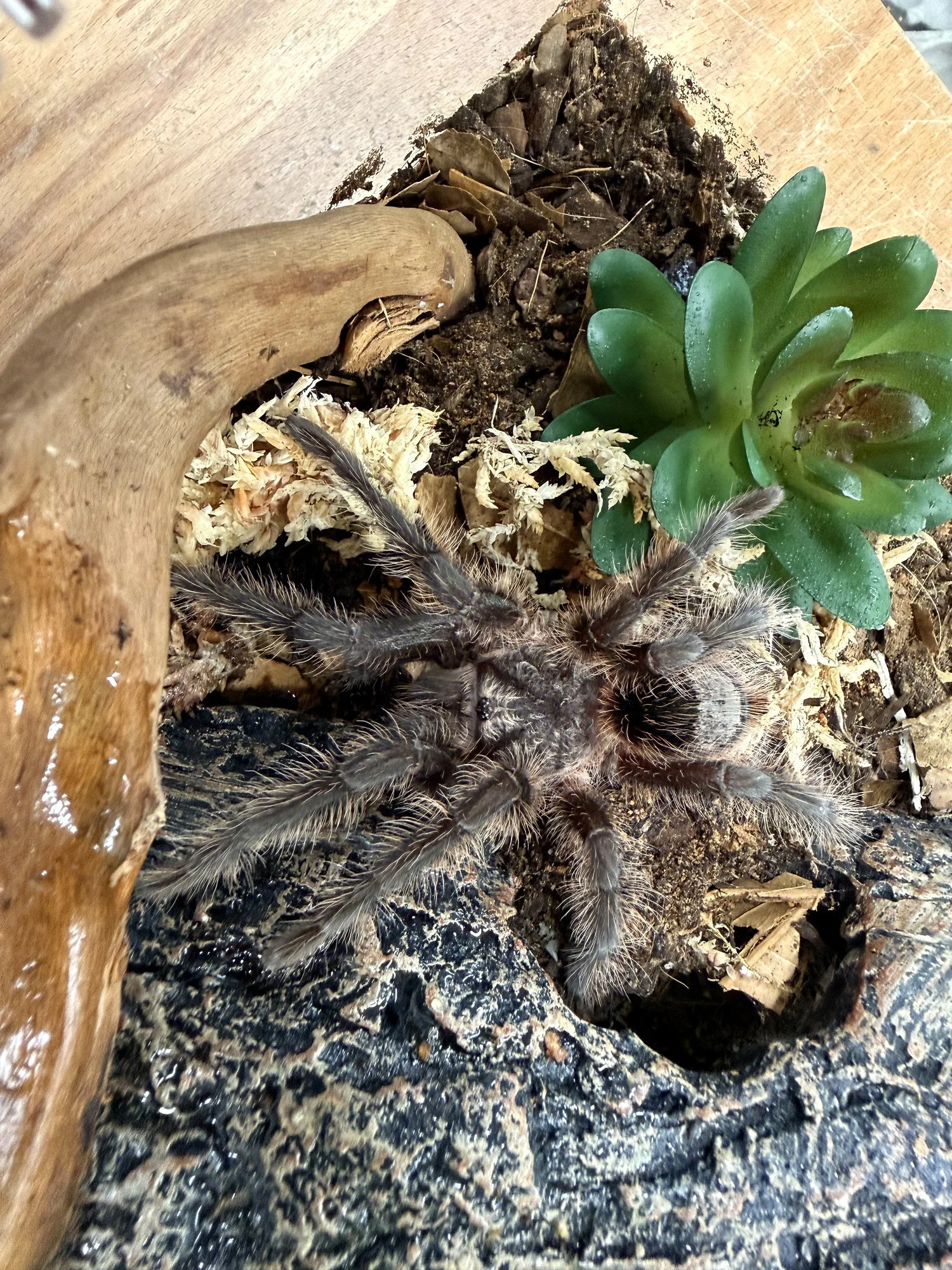
Grammostola grossa
Guarani Giant
Grammostola grossa (Ausserer, 1871) is the Guarani Giant, one of the older validly described Grammostola and the principal species of the Paraguayan and southern Brazilian Chaco. The species is among the largest in the genus, with adult females regularly exceeding 6 in diagonal leg span and built more heavily through the opisthosoma than the comparably-sized but more gracile G. iheringi. Adult coloration is a dense reddish-pink overlay on a chocolate-brown base — less contrast than G. actaeon, but a richer, more uniformly suffused color than the muted G. rosea. Behaviorally it patterns with the rest of the genus: calm, slow, and long-lived.
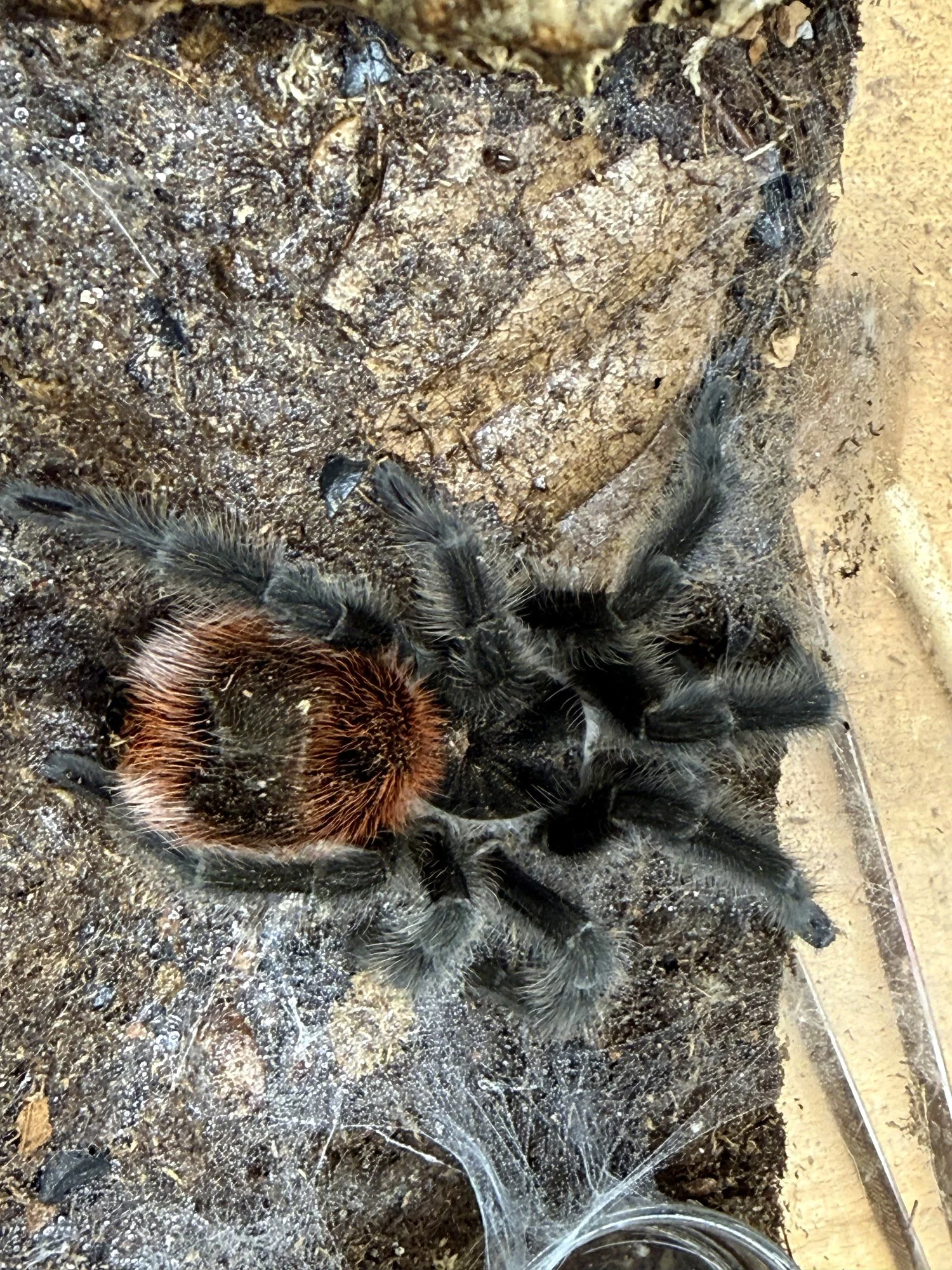
Grammostola iheringi
Entre Ríos / Brazilian Solid Black
Grammostola iheringi (Keyserling, 1891) — often spelled “iherengi” in older trade lists — is one of the larger members of the genus and the principal Grammostola of the Argentine Mesopotamian provinces and adjacent southern Brazil and Uruguay. The species was for many years confused with G. mollicoma (Ausserer, 1875) and circulated in pre-2010 literature under both names; subsequent revisional work has recognized the two as distinct, with G. iheringi the more widely distributed and the larger of the pair. Adults carry the dense red-orange opisthosomal setae and pale silvery-grey legs that are diagnostic for the species, and rival G. pulchra for documented captive longevity in females.
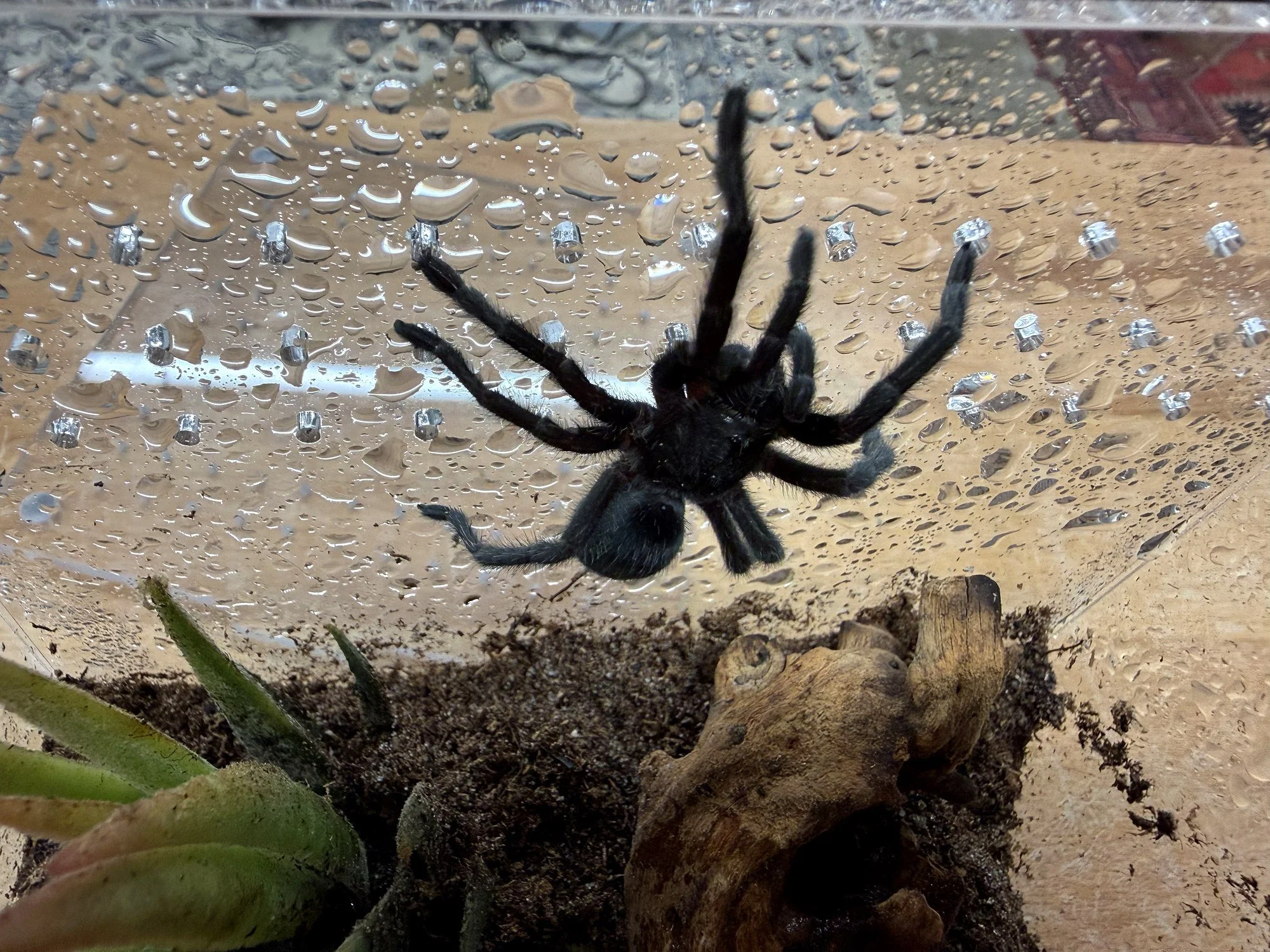
Grammostola quirogai
Uruguay Black Beauty
Grammostola quirogai Montes de Oca, D'Elia & Perez-Miles, 2016 is the Uruguay Black Beauty, a recently described Grammostola distinguished from congeners by a uniformly velvet-black adult coloration without the reddish opisthosomal overlay characteristic of the rest of the genus. The species was described from material collected in northern Uruguay (Tacuarembó, Cerro Largo) and is most morphologically and behaviorally similar to G. pulchra, the Brazilian Black, with which it shares the all-black phenotype that defines both species in the hobby. Calm by genus standard, long-lived, and increasingly available as captive-bred slings since the formal description.
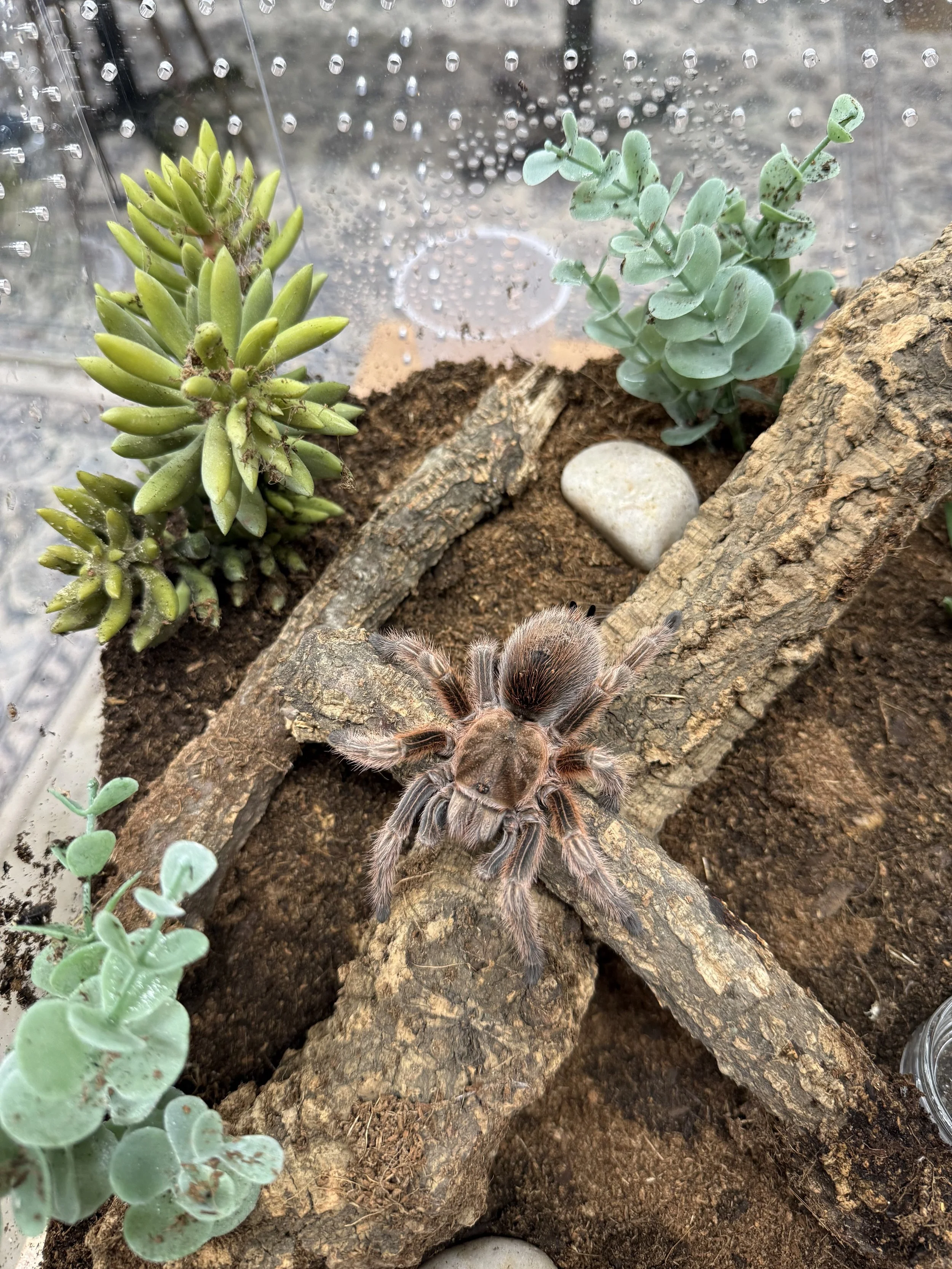
Grammostola rosea
Chilean Rose
Grammostola rosea (Walckenaer, 1837) is the Chilean Rose, the principal Grammostola of central and northern Chile and the species that, more than any other, anchored the genus's status as the “starter tarantula” lineage of the late 20th century. The species was the type of the genus when erected by Simon in 1892 and remained fundamentally stable until the 2022 synonymization of G. porteri (Mello-Leitão, 1936) under G. rosea, which folded the longer-known “Chilean Rose Common Color Form” (then-G. porteri) and the rarer “Chilean Rose Red Color Form” (then-G. rosea) back into a single broadly variable species. Cool, dry, long-lived, and famously placid — documented captive longevity records approach 30 years for adult females.