

Brachypelma
Brachypelma Simon, 1891 is a Mesoamerican genus of large terrestrial theraphosids restricted to Mexico and adjacent portions of Central America. Following the 2020 revision by Mendoza & Francke, the genus was narrowed to encompass the predominantly red-legged taxa, including B. hamorii, B. smithi, B. emilia, B. boehmei, B. baumgarteni, B. auratum, B. albiceps, and B. klaasi, while the black-bodied "curly hair" species were transferred to the newly erected genus Tliltocatl.
Members of Brachypelma are stout, opportunistic burrowers that occupy tropical dry forest, deciduous woodland, and thornscrub along the Pacific slope of Mexico. Adult females commonly attain 5.5 to 6.5 inches in DLS and are characterized by a contrasting color scheme of jet-black integument overlaid with brilliant orange, red, or carmine setae on the patellae, tibiae, and metatarsi. Females are exceptionally long-lived, with documented captive lifespans of 25 to 30 years and occasional records exceeding that.
All members of the genus are listed under CITES Appendix II, reflecting historical pressures from international collection for the pet trade and the patchy, fragmented nature of suitable Mexican habitat. As New World theraphosids, Brachypelma species possess urticating setae of Types I and III on the dorsal opisthosoma and rely on setal flicking and retreat concealment as primary defensive strategies. Temperament is broadly placid and venom is of low medical significance.
The genus has played an outsized role in the history of arachnology and the invertebrate hobby, both as flagship taxa for tarantula conservation and as model species for behavioral, reproductive, and toxinological research. Captive-bred lines now dominate the trade, substantially reducing pressure on wild populations.
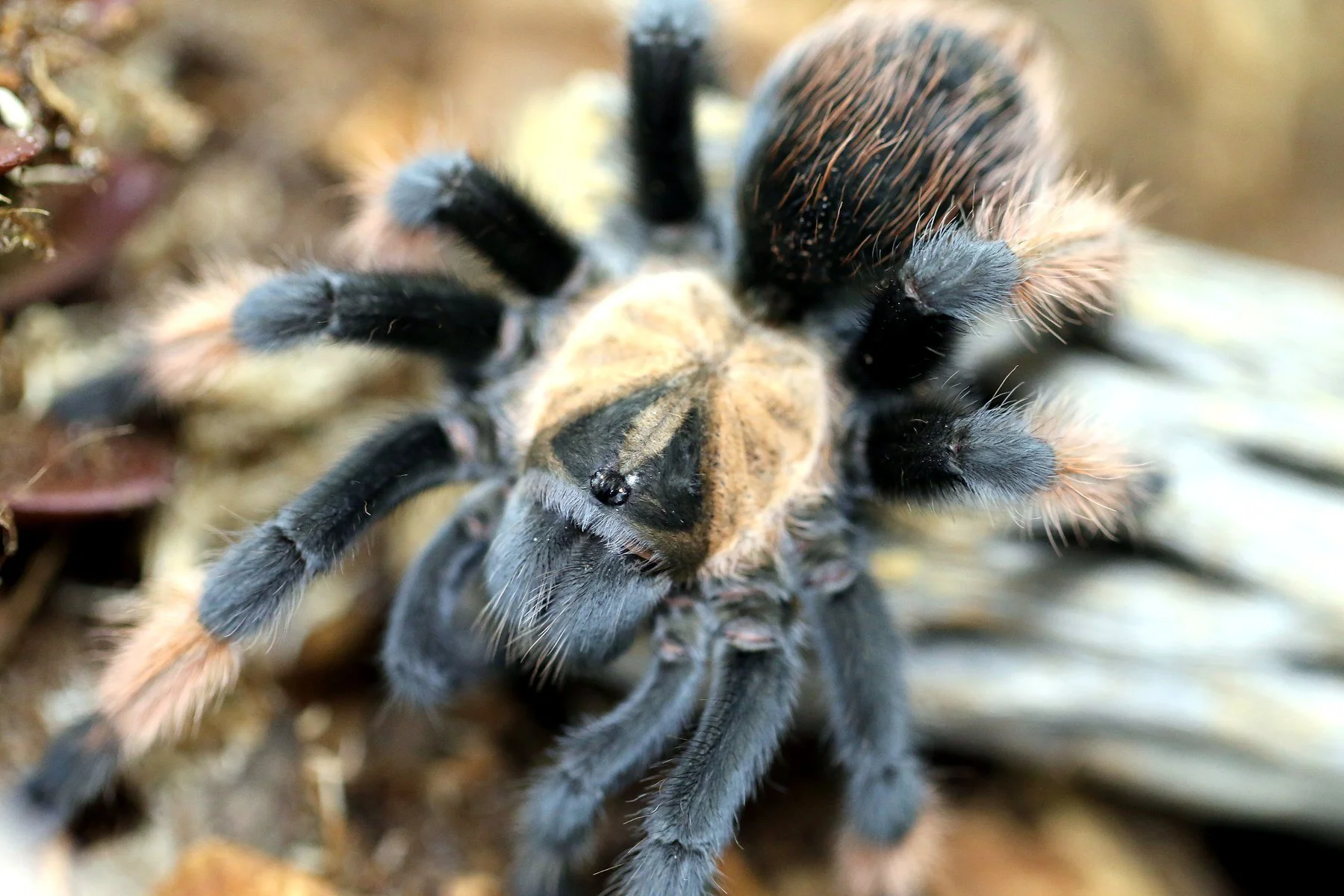
Brachypelma emilia
Mexican Red-Leg Tarantula
Brachypelma emilia (White, 1856) is a medium-bodied Neotropical theraphosid endemic to the Pacific slope of Mexico. Originally described as Eurypelma emilia and transferred to Brachypelma by Simon in 1891, the species is instantly diagnosed by the sharply defined black triangle on the beige carapace — the “emilia mark” — which remains the single most reliable field character across age classes. Long-lived, slow-moving, and handling-tolerant by theraphosid standards, B. emilia was among the Mexican redknee/redleg complex that drove the commercial tarantula trade in the latter half of the twentieth century. All Brachypelma have been listed on CITES Appendix II since 1985, and captive-bred specimens dominate the modern legal market.
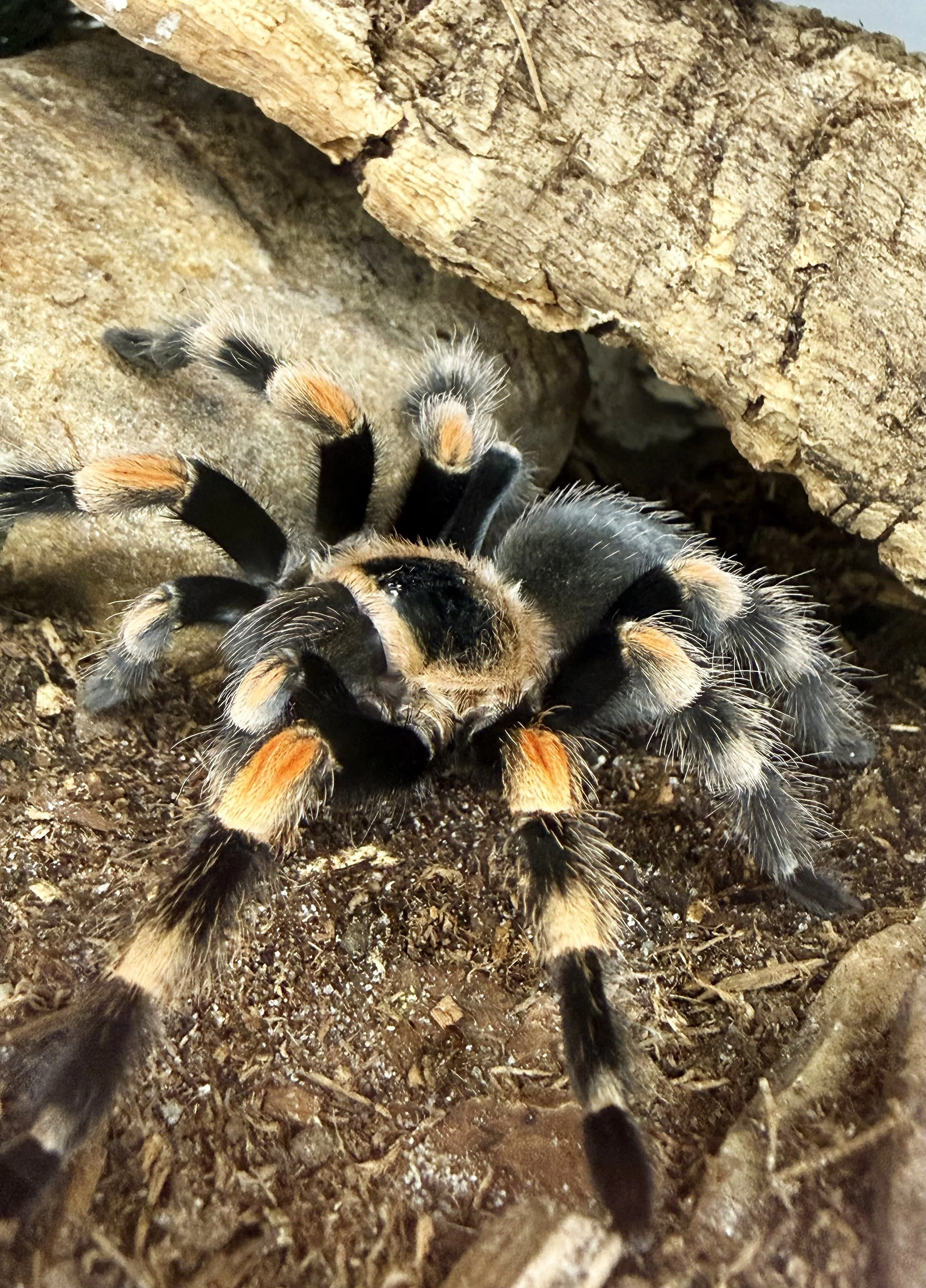
Brachypelma hamorii
Mexican Red Knee
Brachypelma hamorii Tesmoingt, Cleton & Verdez, 1997 is the Mexican Red Knee and the species that, for most of the late 20th century, was circulating in the pet trade and figuring in wildlife documentaries as Brachypelma smithi. The two species were formally disentangled by Mendoza & Francke in 2017 using mitochondrial COI barcoding alongside morphological characters, confirming that the familiar orange-kneed hobby animal is B. hamorii and restricting B. smithi to a separate, more southerly Mexican range. The subsequent Mendoza & Francke revision (2020, Zoological Journal of the Linnean Society 188: 82–147) further split the genus, erecting Tliltocatl for the dark-bodied species (T. albopilosum, T. vagans and allies) and restricting Brachypelma to eight Mexican species with brilliant red, orange, or rose highlights — B. hamorii among them. All Brachypelma species are listed under CITES Appendix II, reflecting sustained illegal collection and the genus's emblematic status in the Mexican tarantula conservation story.
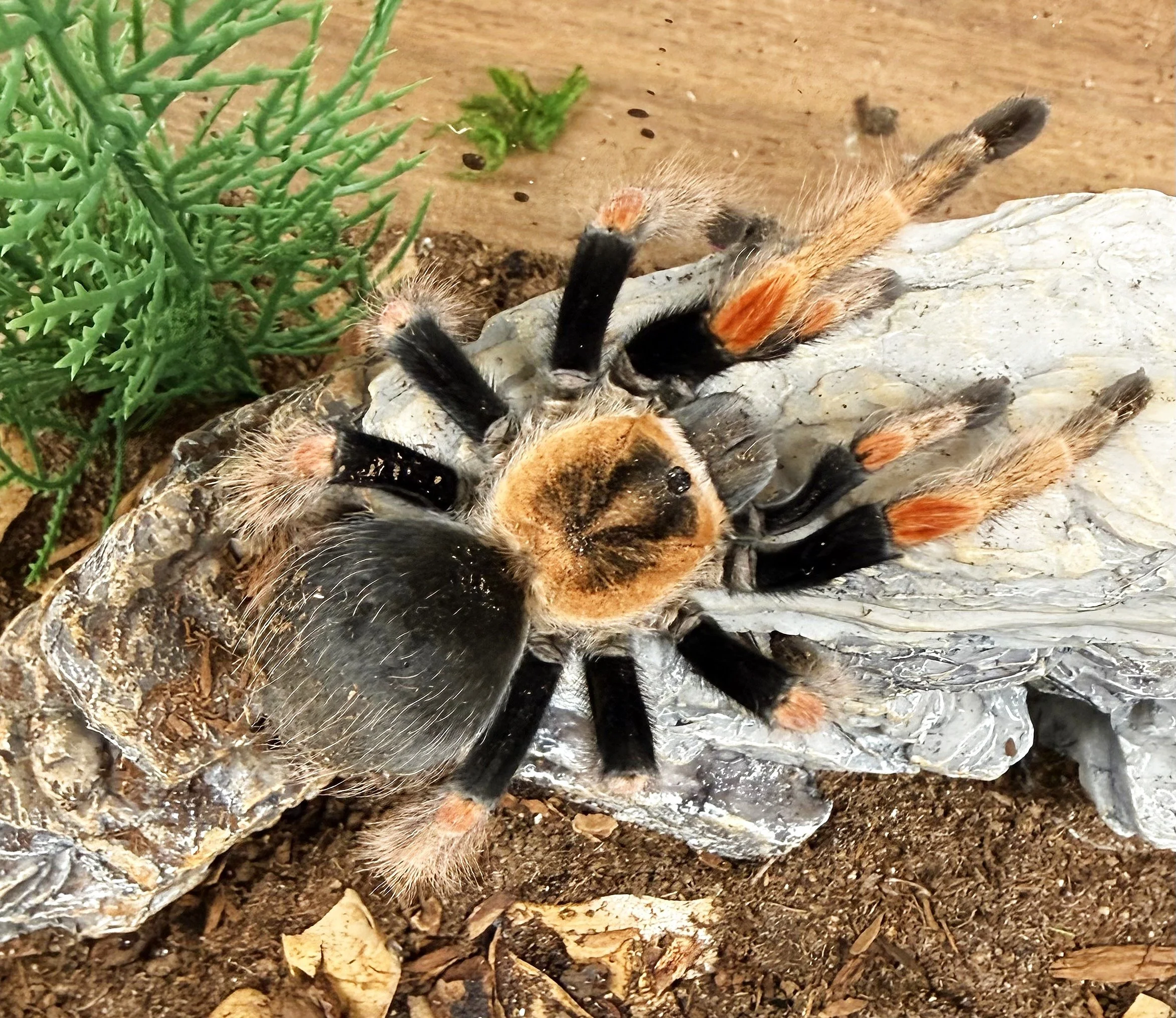
Brachypelma baumgarteni
Mexican Orange Beauty
Brachypelma baumgarteni Smith, 1993 is the Mexican Orange Beauty, described in the British Tarantula Society Journal 8(4): 14–19 from a male holotype collected by Marc Baumgarten (for whom the species is named) in the Sierra Madre del Sur foothills of Michoacán, Mexico; the holotype is deposited at the Natural History Museum, London (BMNH-1999-122). Among the red- and orange-kneed Mexican Brachypelma, it is readily distinguished by the deep flame-orange patellar bands bordered by distinct yellowish zones on the tibia and metatarsus — a warmer, more cream-toned palette than the harder red of B. hamorii or the near-uniform red legs of B. boehmei. B. baumgarteni was retained in Brachypelma s.s. following Mendoza & Francke's 2020 revision (Zoological Journal of the Linnean Society 188: 82–147), which split the genus and moved the dark-bodied species to Tliltocatl. All Brachypelma are listed under CITES Appendix II.
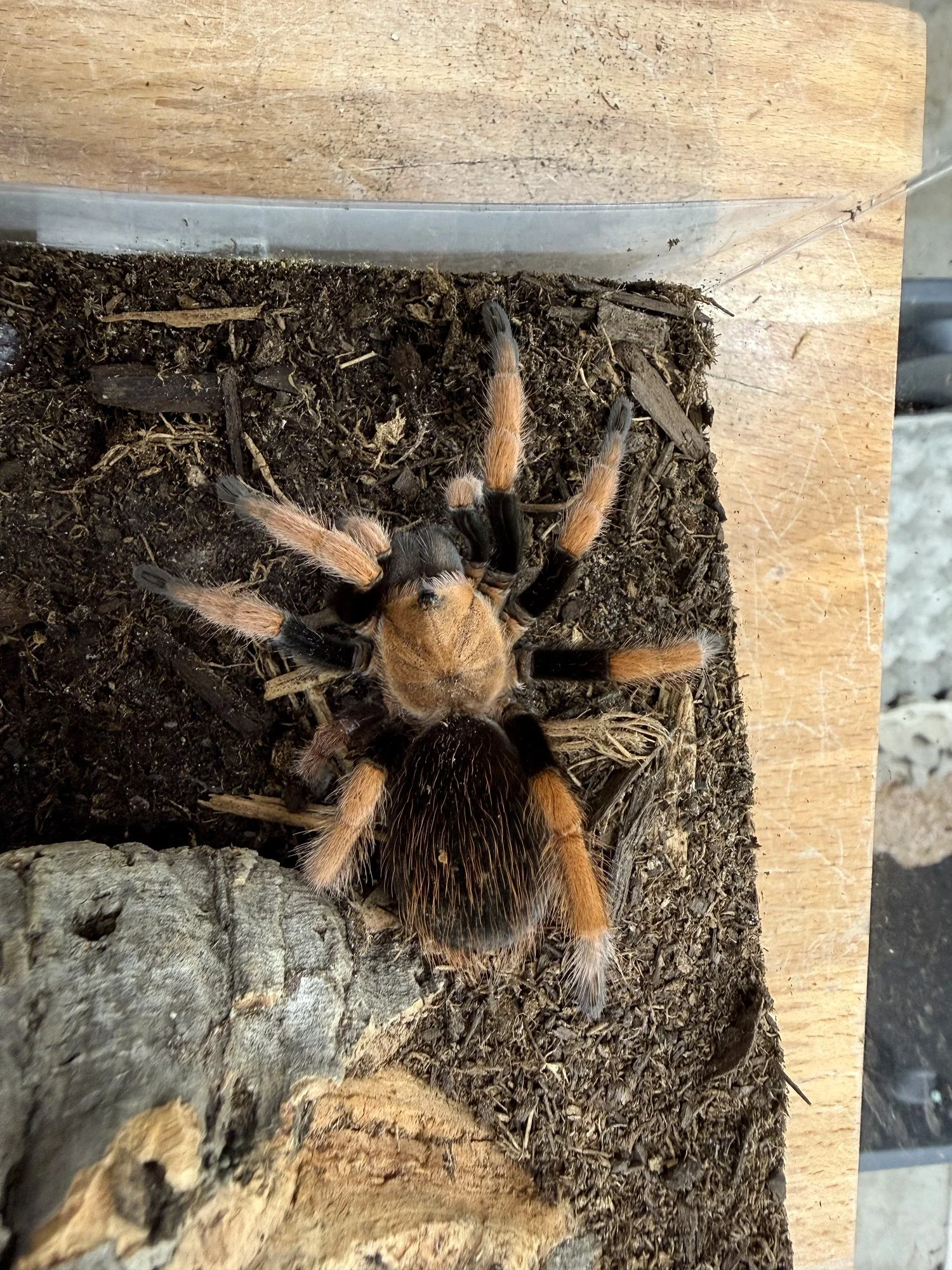
Brachypelma boehmei
Mexican Fire Leg
Brachypelma boehmei Schmidt & Klaas, 1993 is the Mexican Fire Leg, distinguished by the most saturated red-orange leg coloration in the genus — the femora and metatarsi flash a brilliant fire orange against the dark velvet body, brighter and more uniformly red than in B. hamorii or B. emilia. The species was retained in the redefined Brachypelma following Mendoza & Francke's revision (2020, Zoological Journal of the Linnean Society 188), which restricted the genus to eight Mexican species with brilliant red, orange, or rose highlights and erected Tliltocatl for the dark-bodied former congeners. Like all Brachypelma, B. boehmei is listed under CITES Appendix II.
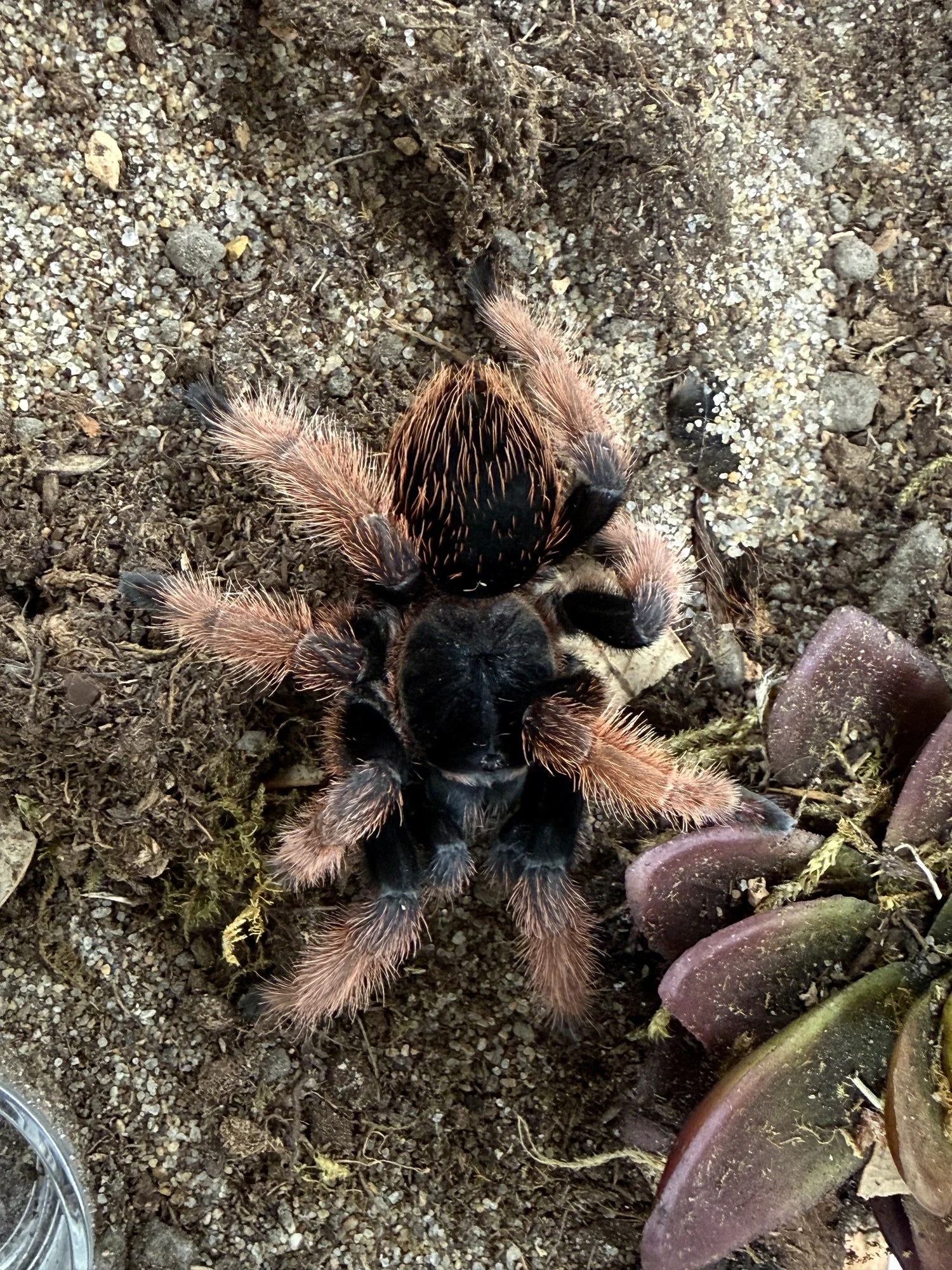
Brachypelma klaasi
Mexican Pink
Brachypelma klaasi Schmidt & Krause, 1994 is the Mexican Pink, the rosiest and least red of the redefined Brachypelma. The species is distinguished by a uniformly soft-pink-to-salmon overall coloration of the carapace, opisthosoma, and legs — the legs lack the saturated banded red of B. boehmei or B. hamorii and instead carry a more diffuse rose flush throughout. B. klaasi was retained in the redefined Brachypelma by Mendoza & Francke (2020) and is CITES Appendix II listed; the species has historically been the rarest of the Mexican Brachypelma in the legal trade and remains comparatively expensive even in captive-bred slings.